When the Rains Don't Come, Neither Does Income
In the villages we serve outside Kolkata, life still moves to the rhythm of the monsoon. When the rains are good, families eat. When they aren't, everything stops. There is no second paycheck, no backup plan just the soil, the sky, and whatever the harvest decides to give.
For the young men growing up in these villages, that uncertainty isn't just an inconvenience. It's a wall. No steady income means no way to marry, no way to build a home, no way to imagine a future beyond the next planting season. We have watched this frustration settle into the eyes of young men who are strong, capable, and ready to work but simply have nowhere to put that energy.
An Idea That Came From Them, Not From Us
A group of these young men came to Kolkata City Mission with a request we couldn't ignore. They didn't ask for a handout. They asked for a chance.
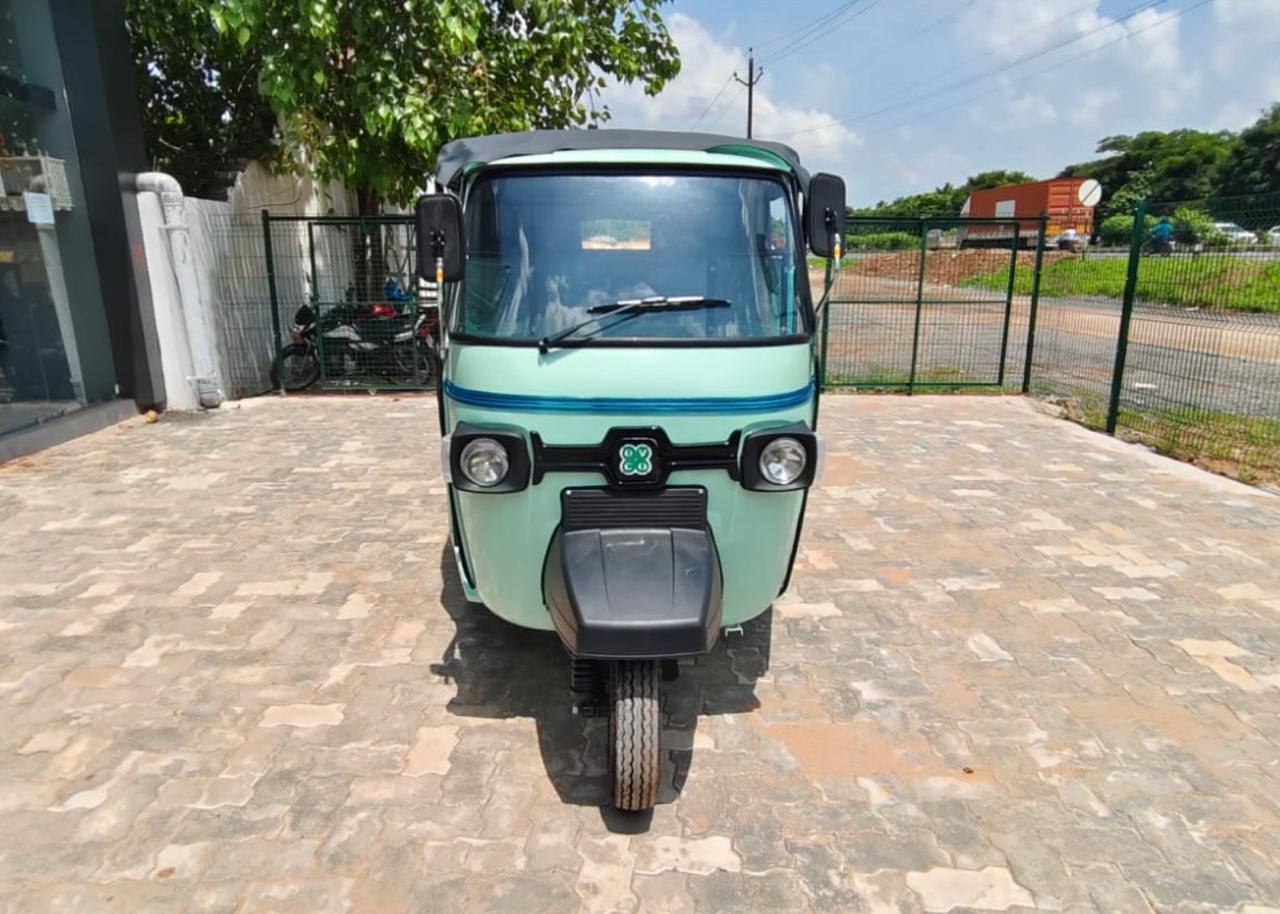
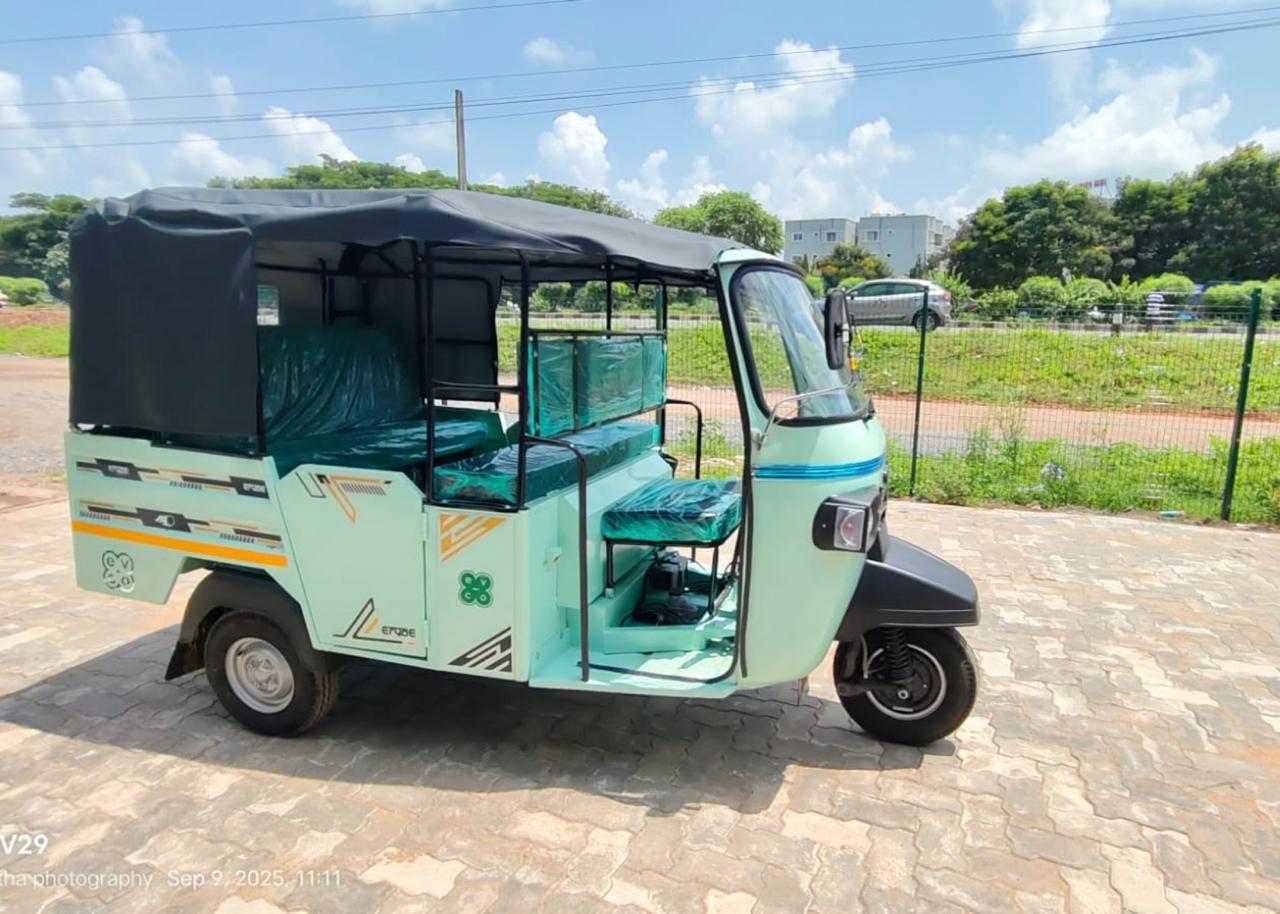
"Give us a grant to buy an Electric Auto Rickshaw," they said, "and we will build our own income."
Their plan was already clear in their minds:
for market days, government offices, and errands that currently mean a long, difficult walk.
turning a medical emergency from a logistical crisis into a short, affordable ride.
including to our own Manthano Modern School, where a reliable ride removes one of the biggest barriers keeping rural families from enrolling their children in quality, English-medium education.
Every one of these trips puts a small fare in a young man's pocket. Multiplied across a single day, and then a month, it becomes something a monsoon can never take away: a steady income.
Why Electric — Because Every Rupee Saved Is a Rupee That Stays With the Family
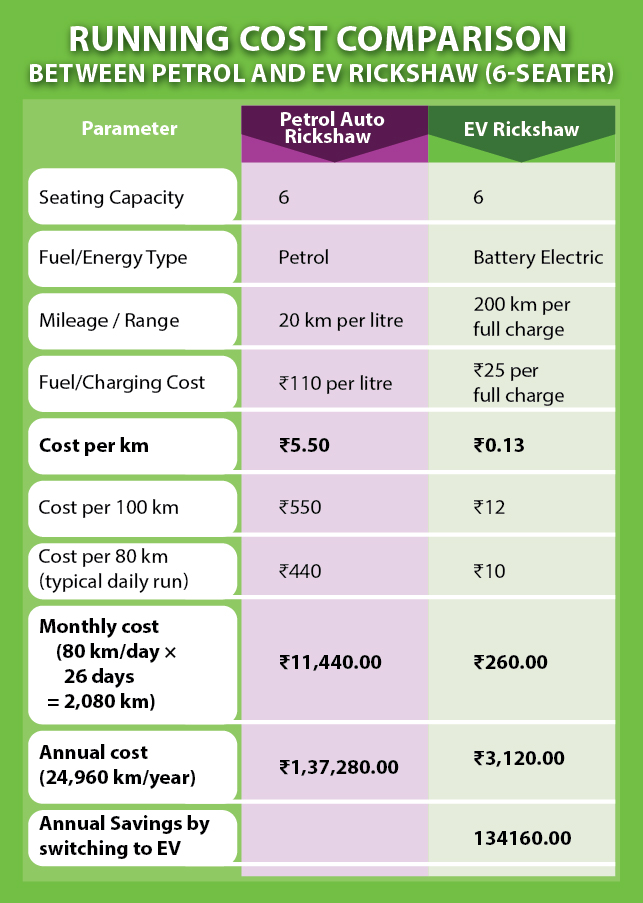
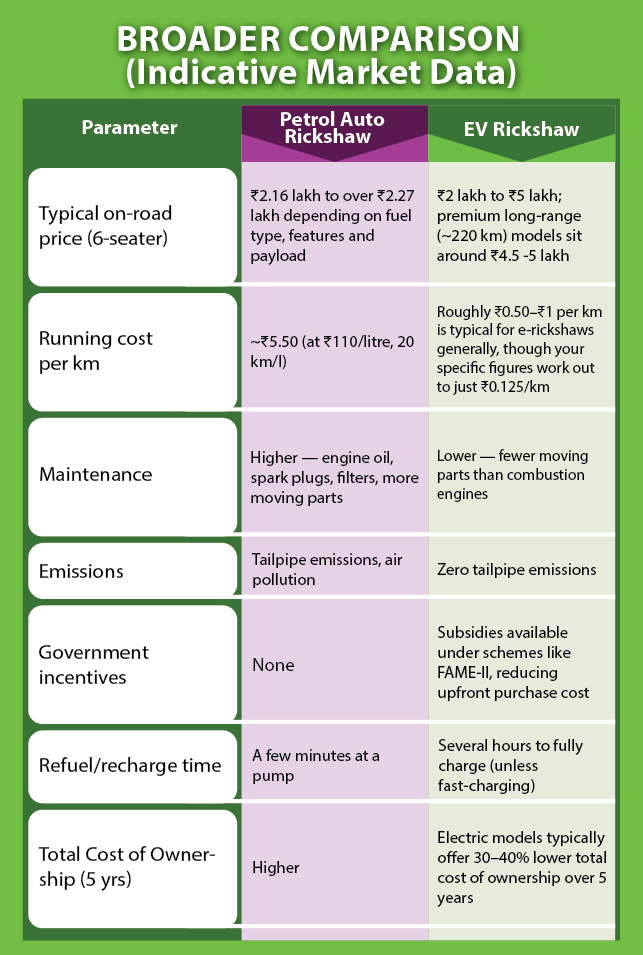
When we researched this project, the numbers made the answer obvious. A standard petrol auto rickshaw in India runs about 20 kilometres per litre, with fuel currently priced at ₹110 (about $1.32) per litre a running cost of roughly ₹5.50 (about 6.5 cents) per kilometre.
An electric auto rickshaw covering the same ground on a single ₹25 (about 30 cents) full charge, with a range of 200 kilometres, costs only ₹0.125 (about a tenth of a cent) per kilometre to run.
That difference is not small. For a driver covering a typical 80 km day, it works out to roughly ₹1,34,000 about $1,600 saved every single year, compared to running the same route on petrol. That is $1,600 that does not go to a fuel pump. It stays with a young man and his family, year after year, for as long as the vehicle runs.
And there's one more piece that makes this project especially fitting for us: Manthano Modern School already generates surplus solar power. These electric rickshaws can be charged directly from that solar supply meaning the "fuel" for this income-generating vehicle costs our young entrepreneurs next to nothing and comes from clean energy we are already producing.
What Your $10,000 Makes Possible
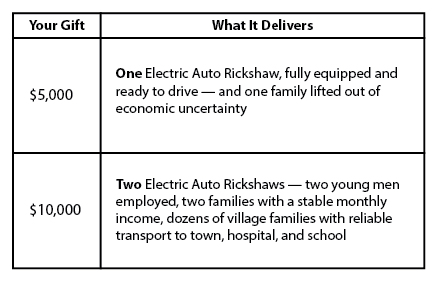
This is not a one-time relief payment. It is a vehicle literally for a family to build its own future. It is dignity, not dependency. It is a young man waking up every morning with a reason and a way to provide.
Everyone Wins
Will You Help Us Put Two Families Back in the Driver's Seat?
A gift of any size brings us closer to this goal but every $5,000 puts a family fully in motion. When you give to this campaign, you are not just buying a vehicle. You are funding a livelihood, restoring dignity to a young man who only ever asked for a chance, and helping a child reach a classroom they might otherwise never see.
Two rickshaws.
Two families.
One community moving forward together.
Please give generously to help us reach our $10,000 goal today.